
How Laser Cut Shims Are Made, From Print to Part
Laser cut shims start as a drawing and end as finished flat parts, with no die built along the way. A focused beam traces the outline, the bore, and any slots or holes, cutting through the sheet as it goes. Between those two points sit several steps that decide how the part turns out: preparing the file, choosing material, nesting the parts, cutting, cleaning the edges, and inspecting against the print.
At Northern Industrial Manufacturing, laser cutting is available for custom parts in carbon steel and stainless steel, flat or formed, with no minimum order and a five day lead time. This article walks through how laser cut shims get made, so buyers know what happens after they send a drawing and what information matters at each step.
Preparing the File for Laser Cut Shims
Laser cut shims begin with the geometry, not the material.
A drawing becomes a cutting program that tells the machine where to move and where to fire. Clean geometry makes that straightforward. Overlapping lines, open profiles, or missing dimensions all have to be resolved first, which is why a clear drawing shortens the path to finished laser cut shims.
The program sets the cut path, the sequence, and where the beam pierces the material to start each feature. Those choices affect edge quality and how much heat goes into a small part. On laser cut shims with several holes close together, sequencing matters more than it does on a large plate.
Choosing Material for Laser Cut Shims
Material decisions shape laser cut shims as much as the cutting does.
Carbon Steel Laser Cut Shims
Carbon steel covers most general industrial work. It is economical and widely stocked, which helps when parts are needed quickly. Carbon steel laser cut shims suit indoor equipment, machinery, and anywhere corrosion is not the main concern.
Stainless Steel Laser Cut Shims
Stainless steel laser cut shims suit parts facing moisture, washdown, chemicals, or outdoor weather. Agricultural equipment, food processing lines, and outdoor installations usually call for it. Stainless costs more per pound, which matters less on a small order than the part surviving its environment.
Sheet Thickness for Laser Cut Shims
Thickness on laser cut shims comes from the sheet they are cut from. Give us the thickness your print calls for and we will confirm what works.
Shapes and Sizes of Laser Cut Shims
Geometry is where laser cut shims show their advantage over tooled parts. Laser cut shims take any outline the file describes: round washers, square spacers, slotted shims, tabbed plates, and irregular profiles. A shape that would need an expensive die costs nothing extra here beyond the cut length.
Laser cut shims handle multiple holes, slots, keyways, and cutouts without extra tooling. What affects cost is the total length of cut and the number of pierce points, not how unusual the pattern looks. Parts with many small features take longer than a plain washer of the same diameter.
Laser cut shims range from small washers to large plates, within the limits of the sheet and the machine. Send the size and thickness the part needs and we will confirm what can be supplied. Parts can also be formed with bends where the design calls for it.
Nesting and Cutting Laser Cut Shims
How laser cut shims are arranged on the sheet affects both cost and quality. Laser cut shims get laid out across the sheet with spacing between them. Tight nesting uses material efficiently, and too little spacing risks heat from one cut affecting the next part. Ordering several parts at once, or a year’s usage in one batch, usually nests better than a series of small orders.
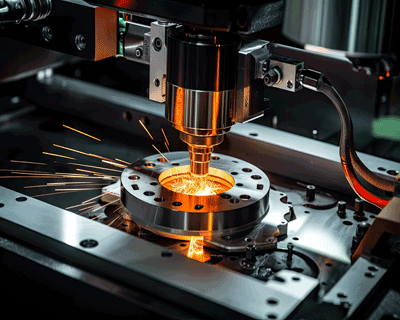
Laser cut shims are formed as the beam melts a narrow path and assist gas blows the molten metal out of the cut. Cutting speed, power, focus, and gas all get set for the material and thickness. Those settings are what separate a clean edge from a rough one on laser cut shims.
Small flat parts absorb heat quickly, and heat can leave stress behind. On thin laser cut shims, that stress can leave a part slightly out of flat. Good sequencing and spacing limit it, which is another reason the program matters as much as the machine.
Finishing Laser Cut Shims
What happens after cutting decides how laser cut shims feel in hand. Edges on laser cut shims form by melting rather than shearing, so they look different than a stamped edge. There may be a small amount of material clinging to the underside depending on the settings and material. Deburring removes it where the part needs a clean edge.
Laser cut shims may carry cutting residue or oil from handling. Cleaning prepares them for use or for any protection that follows. Carbon steel laser cut shims headed for storage usually need corrosion protection, while stainless generally does not.
Send the thickness, flatness, or edge condition the part needs and we will confirm what can be supplied. At Northern Industrial Manufacturing, orders of laser cut shims ship on a five day lead time with no minimum order quantity.
Inspecting Laser Cut Shims
Laser cut shims get checked against the print before they ship. Typical checks on laser cut shims cover the outside profile, hole and slot positions, bore size, and thickness. Marking which features are critical on the drawing focuses inspection where it matters. A blanket tolerance on every dimension usually costs more than it protects.
Laser cut shims from one program and one sheet match each other closely. Across sheets or material lots, small differences can appear, particularly in thickness. Ordering a full quantity at once keeps a batch as uniform as possible.
What Buyers Control on Laser Cut Shims
Several decisions about laser cut shims sit with the buyer. For laser cut shims, dimensions, thickness, material, and quantity are the minimum. A file speeds programming, and a dimensioned sketch works when no file exists. Every missing item becomes a question, and every question costs a day on laser cut shims that are usually needed quickly.
Saying where laser cut shims will live helps a supplier recommend material and protection. Indoor machinery, washdown areas, and outdoor equipment all point toward different choices. That guidance is more useful than a grade specified out of habit.
Mention whether laser cut shims go straight into an assembly, into stock, or out to a customer. Packaging, labeling, and protection follow from that. Laser cut shims headed for a distributor’s shelf need different handling than parts installed the day they arrive.
Common Questions About Laser Cut Shims
A few questions come up on nearly every first order of laser cut shims.
Do Laser Cut Shims Need Deburring
Whether laser cut shims need deburring depends on where the part goes. A spacer installed between two plates may not need anything beyond what cutting leaves. A part handled by assemblers, or one that seats against a finished surface, usually does. Saying how the part is used answers the question faster than a general specification.
How Flat Are Laser Cut Shims
Flatness on laser cut shims comes from the sheet and from the heat the cut put into the part. For many applications, as-cut flatness is fine. Send the flatness the part needs and we will confirm what can be supplied.
Can Laser Cut Shims Replace Stamped Parts
For small quantities, laser cut shims replace stamped parts directly. The finished part serves the same purpose, and no tooling is needed. At production volumes the economics reverse, since cutting time is paid on every piece while a die spreads across the whole run.
Ordering Laser Cut Shims Again
The second order of laser cut shims is usually easier than the first.
Once a program exists, repeat orders of laser cut shims skip the file preparation and nesting of the first run. Keeping the drawing revision and part number consistent between orders is what preserves that. A part reordered under a new number often starts from scratch.
A revision to laser cut shims costs a file change rather than die work. That is the practical advantage of cutting from a program: a dimension can move between orders without anyone building new tooling. It also means the print on file has to stay current, so each order cuts the version you actually want.
Orders of laser cut shims can grow without changing the drawing or the supplier. There is no minimum order and no cap on order size, so the same part can be ordered by the dozen or by the thousand. The five day lead time holds either way.
Getting Laser Cut Shims Made
Laser cut shims move from print to part quickly because nothing has to be built first. The steps in between, meaning file preparation, material choice, nesting, cutting, finishing, and inspection, all depend on what the drawing says and how clearly it says it. Cutting is available for custom flat parts in carbon steel and stainless steel, made in the USA and free of import tariffs. Northern Industrial Manufacturing Corp. runs an IATF 16949 certified plant in the Detroit area, with no minimum order and a five day lead time. Send us your print and quantity, and our team will quote the parts you need.
US Laser Cut Shims Manufacturer
Northern Industrial Manufacturing is your premier parts manufacturer for laser cut shims. With a reputation for the closest tolerances, highest product quality, short lead times, process innovations, and technical prowess – we can meet your laser cutting manufacturing needs, while exceeding your expectations and delivering your parts on time and on budget.
If your manufacturing needs calls for precise, dependable laser cut shims, the team at Northern Industrial Manufacturing is ready to support you. Call 586.468.2790 or request a quote today to discuss your project and discover how our laser cutting services can support your production goals.
Laser Cut Shims: 586.468.2790
Thank you for visiting our blog where we keep you updated on the latest News and Events in automotive manufacturing!
Please check back often to learn what is going on with Northern Industrial Manufacturing, in the world of precision thrust washers, selective shims, and spacers.
HOURS
Shipping
Monday-Friday: 7:00 am to 3:00 pm
Office
Monday-Friday: 7:00 am to 4:00 pm

CONNECT